2008/12/17

A pursuit of a happiness

A little while ago, Mark Pilgrim itemised a list of happiness-producing goals. Maybe tongue-in-cheek to an extent.

While admirable, I found it a little extreme to be practical. And thought my own life required a few more manageable goals for a similar outcome. Now, I’m not saying I’m actively trying to achieve these, but sometime down the line…

  • Stop buying unneeded things
  • Stop sleeping more than 6–8 hours a night
  • Stop drinking alcohol that’s not part of a diet
  • Start a long-term exercise regime.
  • Start actively removing things from my possession. Old clothes. Old books. Old junk.

But the one thing that would make me happy right now? Working hard on my PhD and getting the damn thing over and done with. And what am I doing right now instead?

:)

This would be a good time to link to Doris Kearns Goodwin, who speaks enthrallingly as a story-teller on the themes of happiness and finding meaning in life:

My mind keeps wandering back to a seminar that I took when I was a graduate student at Harvard with the great psychologist Erik Erikson. He taught us that the richest and fullest lives attempt to achieve an inner balance between three realms: work, love, and play. And that to pursue one realm to the disregard of the others is to open oneself to ultimate sadness in older age; whereas to pursue all three with equal dedication is to make possible a life filled not only with achievement but with serenity.

[About 30 secs into the talk.]

I guess I’ll leave it at that.

A touch of Sage

I’ve resisted looking into Sage for a while now, because it’s way too late into my PhD to use it for any legitimate purpose. Furthermore, I’ve spent too much time playing around with Mathematica to justify abandoning it, at this stage.

Still, my interest was kindled anew by the discovery that there’s a LaTeX package that can be used to write ‘literate programs’ in Sage. Well, I was at home, unwell. Why not at least install this Sage program and see how it goes?

First impression: ‘Christ, this thing needs manual installation’. As they say in the readme:

If you’re an OSX guru and want to make steps 4–6 much nicer, join sage-devel and tell us. You’ll be greatly appreciated by a lot of people!

The first thing that could be improved is to distribute it inside a zip archive rather inside a disk image. After decompressed the 300MB archive into a disk image, you have to copy that over the Applications folder anyway!

I really don’t have anything to say more than this, because I quickly exhausted any time allotment for exploring with this new program. I hope in the future that I can become an enthusiastic user of Sage; it seems to me to be the most promising possibility for improving the future of engineering, maths, and science research.

Don’t get me wrong, I do love Mathematica and I rue turning my back on it, but its closed nature, I believe, dooms the long-term benefits it may have. Backwards compatibility aside, if I write code now I really would like to have some hope of running it in ten year’s time.

Responsible drugs

Wherein I meander briefly through the loaded topic raised recently on taking drugs to improve our brains. Opinions are not guaranteed to be well argued or even well thought out. In three parts.

Introduction

Nature has recently published an article “Towards responsible use of cognitive-enhancing drugs by the healthy” that discusses the topic of the current illegality of cognitive-enhancing drugs and how they might be used by healthy people for the benefit of society.

Cognitive enhancement, unlike enhancement for sports competitions, could lead to substantive improvements in the world.

My initial impression is: but of course! Drugs to help cognition have my full support. The comments to the paper, which I’ll discuss in more detail below, have some good arguments both for and against this idea.

[It] would also be foolish to ignore problems that such use of drugs could create or exacerbate. With this, as with other technologies, we need to think and work hard to maximize its benefits and minimize its harms.

Others’ comments to the article

Before I write down my own thoughts, I want to quote some of the excellent comments that have been made. At time of writing, this is a cherry-picked selection of basically every reply to the article that I thought added new information to the argument and/or made me think. I tried to trim it down as much as possible, but, as you can see, there’s a lot of good stuff.

Anonymous:

The key to a satisfying and rich life is not to be found in caffeine or nicotine, much less adderall, ritalin, or next generation cognitive boosters. Furthermore, what effect would widespread use of such drugs have on ever-widening global socioeconomic disparities, regardless of how well distribution/development is monitored?!

Terry Kremin

Timothy Leary advocated the same – LSD can be a great cognitive enhancer. Freud thought cocaine was the greatest gift to mankind ever as it was such a fantastic cognitive enhancer. Slave owners found cocaine a great boon in increasing the production from their slaves. Marijuana is great to help those in mundane lives accept their lives and just trudge through without complaining too much – is that ‘cognitive enhancement’? It increases their productivity and lowers their costs.

But what exact ‘cognition’ are you enhancing? Most of the cognitive enhancers have shown great results in cases where a simple response is required, but they tend to inhibit the ability to acquire flexible representations. These compounds have been great at enhancing learning in one specific case – and addiction to the substance, and an inability to now think flexibly and alter their addictive behavior and drug seeking behavior.

It is also said that it is a fine line between genius and lunatic, particularly in the arts. If people learn specific associations even better without the distractions of random and odd association, how important do we really consider thinking outside the box? If say da Vinci increased his focus through these drugs, how productive would that actually have made him? he may have become one of the greatest physicians of his time, at the loss of his art and inventiveness.

College students use many of these to ‘enhance’ their cognitive ability – on tests that overwhelmingly test rote memory – not creative thinking and application of knowledge. If the tests were changed to more reflect application of knowledge in life, would the drugs still be popular? So we need to not only define what we mean by cognitive enhancement, and not limit it to the over used and abused IQ measures, and also what we define as productive. SO then do we take ritalin to increase our focus, and then also take LSD to increase our insight and creativity?

Focus and production are great, for a robot or computer, or assembly line, but do we really want to say emulating those is the greatest endeavor or goal of humanity? […] How about instigating a national exercise program? Fight obesity and increase cognitive abilities all at the same time.

Mark Hammer

There is a fundamental misunderstanding about the nature of cognitive enhancers. […] The fundamental fact is that unlike mood enhancing/altering drugs, cognitive enhancers require your unswerving cooperation to “work” […]. In this respect, as a “drug”, they are less like an antibiotic (which works without you having to do anything strategic other than take them as prescribed), and more like anabolic steroids (which requires you to actually DO something specific in order to produce the intended outcome).

What they need from you in order to work, is a strategic mind, or more specifically, a cognitive strategy and set of habits that the neurochemical system being affected by the drug supports. No drug has ever, or WILL ever substitute for a strategy.

Sadly, while cognitive impairment can be easily produced with specific disruptors, quite independent of the volition of the subject, cognitive enhancement (again, performance above normal expectations) requires significant volition on their part. If you park your car at a mega-mall and don’t bother to take a few moments to commit to memory where it is parked, no amount or type of drug in the world will make recall any more likely BECAUSE THAT’S HOW MEMORY WORKS.

[A] great many people tend to overestimate the cognitive difficulties they may be having relative to others. In that respect, it is a bit like the entire “penis enlargement” industry that makes profits on the backs of sexual insecurity as opposed to real need. Who DOESN’T wonder if they are smart or attentive enough? […] Get thineself a good night’s sleep, and a decent education, and you’ll be in better shape than anything such substances might conceivably be able to do.

Anonymous:

I’d like to begin by voicing that I off-label ‘cognitively enhance’, as I find that occasional metered use can make astounding increases in my ability as a researcher – which results in tangible benefit to society. It’s not a competition, I’m not taking an exam. I’m doing research; research that I hope may one day improve the lives of many. Of course I exercise, sleep, eat well, and I drink coffee. And yet sometimes that significant extra boost allows me to spend 12 hours pushing through math I frustratedly found myself unequal too for weeks previous. Why is this the act of a social criminal?

Mark Hammer:

It is my contention that perhaps the greater challenge is not the development of substances, nor the legal aspects, but rather the conceptualization of how a substance might impact on cogition in a positive direction when the individual has no particular impairment to start with. We KNOW that we can screw up normal cognition with drugs (and there are millions of people in prison, and families of deceased, who can vouch for that). We have SOME evidence that people whose cognition is lacking due to disease-related processes can SOMETIMES be improved upon by taking pharmacological steps to reverse some known neurochemical deficit or dysfunction. But when it comes to regular folks who have no known problems, the manner in which a substance could conceivably render cognition “better” or “improved”, and the classification of current and future substances into some nosology of types of action or cognitive enhancement, truly escapes us.

Peter Tylee

Does this support the need for further research? Certainly. Research targeted at solving real problems, not pandering to the lazy and the elitist or those who imagine that widespread use of ‘enhancing’ agents would so improve the world that the inescapable associated harms would be justified.

Jeffrey Atkinson

Mark Hammer’s Dec 8th reply details accurately what I perceive to be the crux of the matter – that ’cognitive enhancers require your unswerving cooperation to “work” ’. It appears that for these and similar drugs that the benefits are generally small but real. However, this benefit comes to the prepared and dedicated, and so the drugs are unlikely to turn an idiot into a brilliant scholar.

I doubt the current drugs are going to radically change the way students learn, or researchers work. But it most certainly is the time to start thinking about what happens when, inevitably, the drugs or implanted chips get better to the point were NOT having using them will leave you at a distinct disadvantage.

My own thoughts

As always, the line of scientific idealism that I wish I could strongly uphold falls short of practical reality. This is clearly a subtle topic, with several orthogonal arguments that often confuse the issue and make it hard for me to form a coherent opinion when I’m so far away from the actual issue.

Ideally, I think that schools and universities should actively discourage the use of these drugs, since I feel that these are supposed to be places students where students learn how to learn, rather than actually learn some great chunk of knowledge that can be assessed in examination form. Background knowledge is important “on the job”, but the more important aspect is solving problems that one has not seen before.

I think the desire to use cognitive enhancing drugs in schools is a little misguided as to what the purpose of being in school is actually for. And as the comments above say, sleep and food and exercise all contribute to cognitive skills; it stands to reason that if any of these are in deficit then it’s not constructive to prescribe drugs to fix a different problem.

But I’m not against the idea of taking drugs. This seems a little inconsistent given what I just said. So when do I see these sorts of drugs as playing an important rôle in society? Well, like other drugs that have been used in the past to aid artistic progress, cognitive-enhancing drugs should be used when the individual is actively involved in solving problems that involve a degree of cognitive load.

Where that line is drawn in an individual’s life is rather fuzzy. I would not advise taking performance-enhancing drugs to just “get through” a university course, but at some stage there are going to people with real gifts to share that happen to have taken drugs to get in the position they are in. And I’ll be more than happy when that time arrives, if you don’t want to argue that this event hasn’t already happened a long time ago.

I guess I would pay a fairly high price for the advancement of science versus attempting to retain our humanity. But I’d hope that in doing so, we would remain in a situation to appreciate the humanity that we have.

No content or no comment

In the distant future I would like to write things here that people actually found useful, helpful, interesting, or simply related to. In the meantime, I’d be deluding myself if I thought I’d written much of value over the last few years. Kind of feeling like haven’t been, well, consuming the sorts of things that I’d like to write about here.

However, I do read rather voraciously most days, mostly stuff that isn’t directly useful to either my work or my play. Probably spend too much time on it, to be honest. If you’d like to read along with me, for those of you who don’t already, please, take a look:

http://del.icio.us/wspr

On a related note, if you’d like to read my middling thoughts over on Twitter, I guess that’s better than nothing.

One day, and I really do mean one day, I intend to collect these fractured views of me into a single place. Not that I know how that would help things any.

2008/12/06

Sleep proof

Some Twitter analysis tool spat out the following image of my averaged number of posts to Twitter:

sleep-proof.png

Yikes. See that trend during the week? I’m clearly, on average over quite a period of time, not living with a twenty-four hour sleep cycle. No wonder I’m tired all the time.

(Well, I am awake at 5 a.m. on a Friday night. That could explain things, too.)

I wish I could get more concrete measurements for this sort of data. The direct feedback could well be useful to actually get me to sleep correctly.

2008/11/26

Silly analogies

While I do love the quote, this is a bit silly:

if the read/write head were a Boeing 747, and the hard-disk platter were the surface of the Earth:

  • The head would fly at Mach 800
  • At less than one centimeter from the ground
  • And count every blade of grass

And if the earth was a perfect sphere. That’s kind of important, too.

(And there was no atmosphere. And each blade of grass was evenly spaced. You just can’t scale dynamics between these sorts of scales.)

2008/11/25

Erasing a hard drive

Odd experience. Bought a new 1 TB external drive for backing up my machine (Western Digital, $189 from MSY — laugh uproariously at their website, but love their prices).

Plug into my machine, and it appears as an antiquated FAT disk. That’s normal, as it’s the baseline type of file system that all platforms will be able to read from and write to. But not optimal; much better on a Mac to use HFS+.

Reformating the disk is a job for Disk Utility. Selected ‘Mac OS Extended (Journaled)’; chose the disk name (‘Mervyn’); hit ‘Erase’…and no good.

‘File system formatter failed’

WHADDYA MEAN?! That’s not supposed to happen.

A few minutes of panicking before I thought to, duh, Google the problem. Easy fix:

  • Go to the Partition tab;
  • Select 1 Partition (or more, if you like);
  • Click Options: select ‘GUID Partition Table’;
  • Click Apply.

This has the same result as erasing the volume with the side-effect of , you know, actually working.


In the course of doing all this, I saw a dialog box in Mac OS X that took me back: ‘Disk not recognised; would you like to initialise it?’ Cue memories of being a kid using System 6, not knowing what that word meant; luckily, no data was harmed before I learned it just meant Erase.

You sure don’t see ‘initialise’ used much these days…probably for good reason!

2008/11/18

Tables vs. CSS

Jack Shedd says

CSS makes certain things remarkably easy. But there is a class of design problems that are nearly insurmountably hard due to poor design decisions within CSS.

Which may be true. But I’d posit to say that tables (catch his link) are not the answer.

In many cases, a more versatile system is going to be slower for the particular case that a simple system is built for. That doesn’t mean the versatile system is broken.

Having said this, I would like to read some good criticism of CSS. I haven’t kept up with it for several years and I think it makes an excellent model for sorting out a successor to LaTeX.

2008/11/17

Movember

Um, go the mo?

n683105473_1469803_872.jpg

You can blame the drunken look on the blurriness of the photo. Or vice versa, perhaps.

2008/10/29

Vista plus one

Microsoft has been talking up their next version of Windows. They seem to be getting the direction right in terms of marketing their progress going forward.

I believe the vague analogy between Vista and Mac OS X is a pretty good one: both represented forwards looking technology that was a bit of a hurdle to get over in the beginning. But the future potential makes it all worth it.

Competition between the platforms is really a win-win situation for everyone involved. For what it’s worth, I’m just as enthusiastic about Snow Leopard than I was about any “feature-based” upgrade to Mac OS X.

Now, not to knock Microsoft here but I’ll believe the new Explorer features when I see them in actual shipping versions of Windows. (I was rather disappointed the amazing Explorer features shown in a demonstration of Longhorn never made it to Vista, seemingly. Not that I actually use Windows, but the ideas were fantastic.) But these user interface features for window management sound insanely useful:

Dragging a window to the top of the screen maximizes it automatically; dragging it off the top of the screen restores it. Dragging a window to the left or right edge of the screen resizes the window so that it takes 50% of the screen. With this, a pair of windows can be quickly docked to each screen edge to facilitate interaction between them.

The transition between these states had better be very clear about what’s going on, or that’s going to be some weird-feeling behaviour.

On a tangential note, as many people have commented before, it’s just crazy that window placement doesn’t have “snap-to-edge” in either of the major platforms yet.

A Good Review

I like it when journals publish articles about academic publishing. Now, this one, called “A Good Review”, doesn’t say too much, but it does have a nice list of dot points: (and I quote)

  • A good review helps the members of the scientific community achieve standards higher than what they might be able to do without expert feedback.

  • A good review helps the authors learn something new or consider something they had not thought about.

  • A good review helps to improve the communication of the material and alerts the authors on statements that may be misleading, misunderstood or plain wrong.

  • A good review is done in good faith; it addresses the contents of the manuscript at hand not the state, status or character of the authors.

  • A good review is not about the expertise or cleverness of the reviewer, it is about the quality of the proffered manuscript—and, really, nothing else.

Me again: Generally, in my limited experience, I would say that feedback from the reviewing process has made my (few) papers better. At times, you don’t really want to hear what they have to say, but after changing things around and spending some extra time, the manuscript is improved.

Having said that, I don’t believe the huge lag times for this process are justified, and we’d all be better off with a more informal system like arXiv. The papers that are good will still be cited and read. Despite the whole review process, you still get some stinkers even in the so-called “high impact” journals.

Rather than hindering the publication of new material, we “just” need a better way to catalogue and access what’s already there. Should new postgrads really have to re-create entire literature surveys for every single project? One day, I would like to create the “Wikipedia of literature reviews”. But not like Wikipedia, coz that’s not the best model for this sort of information.

2008/10/24

Email client wishlist

Due to Poul-Henning Kamp, via Karl Fogel:

But let me suggest a few pop-up windows I would like to see mail-programs implement whenever people send or reply to email to the lists they want me to subscribe to:

  +------------------------------------------------------------+
  | Your email is about to be sent to several hundred thousand |
  | people, who will have to spend at least 10 seconds reading |
  | it before they can decide if it is interesting.  At least  |
  | two man-weeks will be spent reading your email.  Many of   |
  | the recipients will have to pay to download your email.    |
  |                                                            |
  | Are you absolutely sure that your email is of sufficient   |
  | importance to bother all these people ?                    |
  |                                                            |
  |                  [YES]  [REVISE]  [CANCEL]                 |
  +------------------------------------------------------------+

Okay, that one’s a little silly. But this suggestion deals with a problem even I (I know!) have had in the past:

  +------------------------------------------------------------+
  | Warning:  You have not read all emails in this thread yet. |
  | Somebody else may already have said what you are about to  |
  | say in your reply.  Please read the entire thread before   |
  | replying to any email in it.                               |
  |                                                            |
  |                      [CANCEL]                              |
  +------------------------------------------------------------+

2008/10/21

Poor writing

I’m currently reading a paper related to my thesis. Remind me not to write like this:

In this section, the design of a beam-mass system, whose efficiency in converting the energy of vibration sources into electricity is increased by means of permanent magnets, is proposed.

Moreover:

This section consists of several subsections.

2008/10/12

US Election 2008 FAQ

I don’t know how this only just turned up in my feed reader, but Peter Norvig of Google fame has a great collection of information about the upcoming US elections:

http://norvig.com/election-faq.html

For the record, I’m pro-Obama but I’m sure that McCain would do a much better job than Bush. I’m pretty appalled by Sarah Palin, however.

I’m still amazed by the tax plans proposed by the two rivals; how McCain’s “cut tax to the rich and give (basically) nothing to the poor” could possibly be rationalised, especially by voters, really makes me wonder on its logic.

Anyway, that’s all I’ve really got to say in the matter, since I’m not American and can’t vote.

2008/10/04

In an ongoing series…

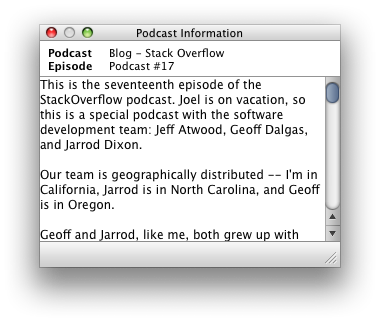
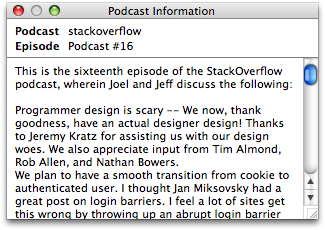
iTunes 8.0.1 fixes the gutter problem of this insignificant window:

podcast-information3.png

Compare:

ugly-podcast-window.png

That scroll bar chrome still looks out-of-place, and the window still floats above all others even when iTunes is not frontmost. I think that bottom decorative strip should be the same height as the titlebar of the window; before it was too thick, but now I think it’s too thin.

Baby steps…

Diaeresis

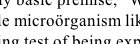
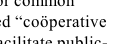
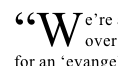
Here’re two examples of some odd typography with which I’ve recently become enamoured:

diaeresis.png

diaeresis2.png

Courtesy, who else, the New Yorker.

I’m planning on this diaeresis usage for my thesis, but my supervisors have already raised questions about it. Perhaps it’s not such a good idea. After all, few people seem to find the spelling exactly intuitive, and even fewer, I’d wager, are familiar with the term “diaeresis” in the first place.

The diaeresis looks exactly like an umlaut, but has a rather different meaning. The umlaut, say in the word über, is an accent that indicates a change in vowel sound for that letter. It’s not really used in English (where double-consonants more often serve a similar purpose of changing the preceding vowel sound), but the umlaut is rather common in many European languages.

By contrast to that particular diacritic, the diaeresis is used, such as in the word naïve, to indicate that the two adjacent vowels are pronounced separately. nay–eve, instead of (er) nyve, let’s say. Even though all English speakers will pronounce the more commonly spelt naive correctly, anyway.

Which brings us back to the examples I showed above. The New Yorker, then, does not use hyphens to separate the halves of compound words. This is desirable in order to reduce the number of marks used on the page to represent the word; this has implications both for visual simplicity and running length of a piece of text (i.e., hyphenation and justification are easier when less characters are used).

And when it ends up that a compound word is used but the absence of the hyphen results in two adjacent vowels—then’s the time for the diaeresis in words like coördinate, coöperate, and so on. Personally, I think this is quite tidy and quaint, and I’m trying to emulate their style.

2008/10/01

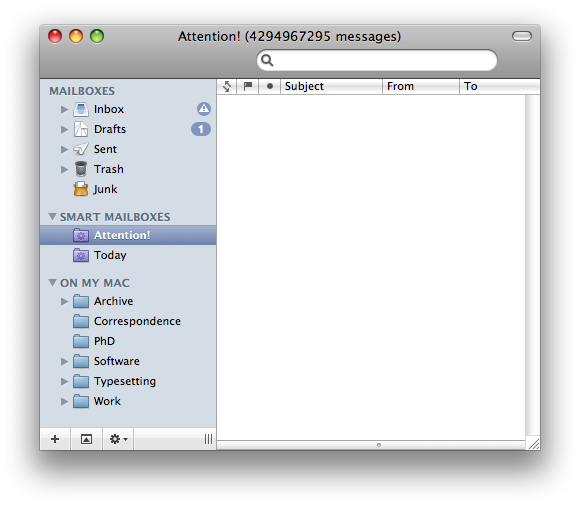
2³² − 1 messages

I was so happy to achieve ‘Inbox Zero’. In the final hour, Mail.app had the last laugh:

silly_mail.png

Jokes aside, I’ve found the message count for smart mailboxes to be fairly flaky.

2008/09/18

Rands on slides

Rands has written some really great articles on how to give and prepare for seminar presentations (too lazy for links; use Google). Here’s another gem of his via Twitter:

If you can’t practice the hell out of your slides, you can, at least, care the hell out of your slides.

I believe the point here is that with carefully-done slides, half of your problem is solved already. When your slides don’t help to pull you along in your train of thought, it’s easy to lose momentum and lose the coherency of your overall “message”.

2008/09/13

Oh god, my eyes

A little while ago I complained about the “Podcast Information” window in iTunes.

Well, there’s now been an iTunes update, and I’m sad to say things are now much, much worse. On the plus side they fixed my bug.

It’s a pity they had to hit the damn window with an ugly stick at the same time.

ugly-podcast-window.png

Come on, guys. It’s not that hard. At least the old one had some padding in there:

podcast-information.png

And that new shadow looks ridiculous. Really.


They also didn’t paid any attention to improving its behaviour. That’s okay. The other new features in iTunes 8 are rather nice.

But this window now floats above all others even when iTunes is not frontmost. This is the least appropriate behaviour this window could possibly have. I guess I’ll have to file another bug report…

2008/09/10

iTunes’ “Genius” logo

This logo, for iTunes’ new “Genius” feature, is only going to look good once we have displays capable of 200 dpi:

genius-logo.png

Too many jaggies in the lower half of that centre orbit.

2008/09/09

Google Earth and running

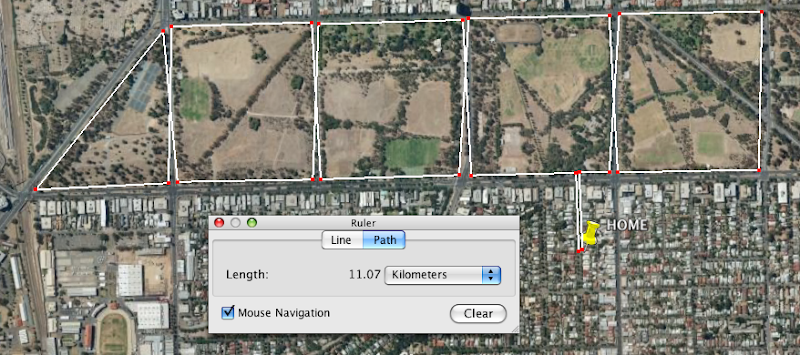
Let me just say that one of the few actual uses I’ve found for Google Earth is utterly indispensable to me right now. Path distance measuring:

running-map.png

With only eleven days to go before the 12km City to Bay run, I’ve got some training to do…

2008/08/31

A thought on iPods, 2008

Jesper wrote the definitive prediction list for what Apple might reveal in this year’s iPod lineup refresh, but I just wanted to make a comment or two to see how badly I’m wrong when the announcements are actually made.

Firstly, I believe that if solid state drives were large enough, Apple would have no problem retiring the iPod classic. Not that it doesn’t have advantages over the iPod touch (“blind” operation, first and foremost), the iPod touch is a much better device in the scheme of things.

However, while it’s possible the iPod touch could reach 64GB this year, I still don’t think that’s big enough to drop the 160GB iPod classic. Next year, though, definitely.

Jesper raised a possibility I hadn’t considered: the iPod shuffle could be retired in favour of the iPod nano. (Not the iPod nona, which still has strong support in the Mediterranean community.) Considering you can buy 4GB flash drives for less than $30 these days, it’s probably going to happen sooner rather than later. I think the timing is a shade too early to completely drop the iPod shuffle entirely, and this is a change that will be happening next year, not this.

If a new product was going to be announced, I’d peg money on a re-designed iPod nano that has a similar form factor the iPod touch but much smaller. That is, an approximately 16/9 ratio device with a screen on one side and a button or two on the edges. Removing the scroll wheel allows for a large screen without really increasing the size of the whole device. And I think the screen would be just large enough to accept a limited range of input behaviour.

But really, I don’t think that’s going to happen (I can imagine an iPhone nano product sooner than this one); my predictions for this year are lack-lustre: no new products, very big de-emphasis on the iPods shuffle and classic; bumps on specs and price drops across the line for the iPods nano and touch. Hopefully bigger announcements regarding software and services. It’s about time for a bit of a refresh of the iTunes store, methinks. I could dream about a re-designed iTunes itself, but I don’t want to get my hopes up.

2008/08/16

The chngpage package vs the changepage package

It occurs to me that there aren’t many people writing on the web about LaTeX. Mostly, I suspect, for the same reasons you don’t see as many people writing about HTML+CSS these days. It’s just a tool that some people use.

(That’s not to say that there aren’t periodicals and the like for people to write about what’s been going on.)

Anyway; here’s a nugget of information that might be of some use to some people in the near future.

Peter Wilson’s memoir LaTeX class is a major, recent, project that ties in many ideas for how to layout and customise a document in a single class. Some of the ideas in the class are also broken out into separate packages so that people who aren’t using memoir can still take advantage of them.

“chngpage” was one such package. It allowed you to locally change the layout of the text block in various different ways (for example, to place a figure that is centred on the physical page rather than centred in the text block). It also provided the very nice ability to robustly detect whether you’re on an even or odd page at any given position in the document (which is harder than you might expect).

Unfortunately, because chngpage was written before memoir it differed in one important way; to cut a long story short this made it tedious to write code that required the chngpage package because you had to jump through hoops to get it working in memoir as well. (As an example, see my addlines package.)

The problem was that neither memoir nor chngpage could be changed because of backwards compatibility problems. So Peter Wilson wrote a new package “changepage” that provides the same functionality as chngpage but uses the same interface as memoir; the result of this new package is that chngpage should no longer be used.

While it can still be found in the “obsolete” section of CTAN (here), chngpage is no longer included in TeX Live (as of TeX Live 2008). Packages that use it should switch to changepage, which is simply a matter of something like s/\ifcpoddpage/\ifoddpage/ for those who like regular expressions.

That reminds me. I’ve got a package that uses chngpage that I really need to update now…

Update: Fearless Leader (a.k.a. Karl Berry) has convinced me that any backwards compatibility problems caused by removing chngpage outweighs any nice ideological benefit from removing the package entirely. So it still exists in TeX Live! (Which was not my decision, but I agree with it.) The moral of the story, in the end, is the same: in new documents and packages, use the new changepage so that you play nicely with memoir

2008/08/11

iTunes’ “Podcast Information” window doesn’t scroll

This is bug #6139143.

SUMMARY

iTunes’ “Podcast information” window doesn’t accept scrollwheel or two finger trackpad scroll input.

STEPS TO REPRODUCE

  • Open the “Podcast Information” window (note that there’s no menu item for it, too)
  • Select a podcast with a long enough blurb so that the scroll bar appears
  • Try and scroll the text with the trackpad or with a scroll wheel

RESULTS

Doesn’t scroll.

Should.

NOTES

While we’re on the subject, what’s with that weird window re-size widget?

podcast-information.png

2008/07/22

Problems with LyX #1

This is the first article in a possibly ongoing series documenting the problems in LyX that I’ve had to debug for people in my department. If you’re not a LyX or LaTeX user, there won’t be much to interest you here.

I’m a LaTeX guy through and through, and while I would never think of writing in LyX myself, I can totally appreciate that “normal” people find LyX much more approachable (and easier!) than LaTeX. Nonetheless, LyX is a rather leaky abstraction, and most errors that people have are due to their complete lack of understanding of the underlying LaTeX layer. In my limited experience.

That’s okay; LyX is free software and they can’t afford to test on beginners. I’m sure heavy LyX users (and the developers) don’t run into the same problems that I have to solve, because they know what they’re doing and don’t make the same mistakes. At the same time, I’ll go out on a limb and suggest that sometimes their knowledge of LaTeX isn’t as comprehensive as someone like me who actually writes documents and programs packages in it.

Now, the errors I report here are necessarily vague and don’t pin down problems very well. That’s because I can’t afford to spend any more time on this at all. That said, if contacted directly I’ll do my best to reply quickly and in as much detail as I can. Here we go:

  • Please make it much easier to insert a floating graphic; it’s the 99% case and should be a single action in the GUI. New users see “Insert graphic” (or whatever it says) and paste it inline in their document. If it were wrapped in a float, they’d get what they actually wanted.

  • Especially in maths mode, if non-existent macros are typed they shouldn’t be displayed in a pretty way. For example, I had a user who was used to typing “\alpha” to get greek type slashes before all roman characters in maths (e.g., “\x”). The visual display in this case (simply an italic “x”) implied that this was legal when it in fact produced sometimes complicated errors (in the case that an accent macro was typed such as, say, \i).

  • The prettyref package for automatically formatted cross-references is basically the worst choice from a variety of packages that do this function. Use the refstyle package instead.

  • If there is no bibliography inserted in the document, please prompt for one (with explanation) if a citation is attempted. It’s not obvious that you have to insert a bibliography before you’re allowed to reference citations (the logical flow is the other way around: I cite a paper and a bibliography is created from that). Adopting the biblatex package and putting the \bibliography{} into the preamble would help things in this regard.

  • File paths seem to continue to be a big problem. Yes, it offends my sensibilities when people use analphabetic characters in the directory names (not to mention spaces), but these damn users are just doing what the OS allows. If putting a LyX file inside the folder “# New Stuff/” causes the compilation to fail, then it should either protect the path better or just tell the user straight up to rename the folder.

  • This may no longer even be a problem, but a while back it was fiendishly annoying debugging a problem where something like “vector $[a,b,c]$” was put inside a subfigure caption. The reason? Subfigure captions are input in LaTeX in square brackets, so any square brackets in the caption need to be hidden from the parsing. LyX should automatically wrap the subfigure caption with curly braces behind the scenes.

That’s all for now. That these are only minor details, which is a testament to the highly useable state the LyX team have brought their program over the years. Here’s to a brighter future yet.

Naming in a bibliography

So, how should it look? The bibliography, I mean. Is it the author or the work that is the most important aspect of the citation? In other words, how much emphasis should be placed on the name? Here are (most of) the possibilities for representing people’s names, let alone the rest of the citation information. Enumerating the types has helped me decide on a style for my thesis.

The default for the biblatex package is to place the first author’s last name first, which makes the bibliography look more obviously alphabetised:

Robertson, Will S., Ben S. Cazzolato, and Anthony C. Zander

This is a nice example but I don’t think it’s helpful for displaying the names more clearly. All last names first removes the inconsistency of reversing the name order of the first author only:

Robertson, Will S., Cazzolato, Ben S., and Zander, Anthony C.

In all of these “full name” cases, I’d prefer to use the European tradition of printing the last names in small caps for emphasis.

Will S. Robertson, Ben S. Cazzolato, and Anthony C. Zander

But maybe first names don’t matter, and should be normalised away to single initials:

Robertson, W. S., Cazzolato, B. S., and Zander, A. C. (*)

or

W. S. Robertson, B. S. Cazzolato, and A. C. Zander

With names in initialised form, it just doesn’t work to have mixed name orders: (The possibility of too many adjacent initials.)

Robertson, W. S., B. S. Cazzolato, and A. C. Zander

I’m inclined to favour the starred example above. Mostly because full first names aren’t always supplied by authors (or the references to them), so without the “initialisation” you’d get a mix of full first names and initials between different entries in the bibliography.

The counter-argument here is that bibliographic databases should always provide first names to avoid problems of author ambiguity, but this is a printed bibliography we’re talking about, not a bibliographic database. Nice to be concise.

And really, it is the work that’s important. The authors of the paper provide, perhaps, a taste of the authority the paper might hold, but whether it’s interesting to chase up should rest entirely on how it’s being referenced in the work in which it is cited.

2008/07/15

Improving iTunes’ “Podcast Information” window

Open a playlist that contains podcasts and turn on the “Description” column in the “View Options”. Each item in this column contains a circled “i” icon that opens up the “Podcast Information” window.

I have two small suggestions to improve this window:

  • There should be a way to open/show this window with a keyboard shortcut, and (optionally) a menu item as well. Shift+Cmd+I is a suitable candidate (and this shortcut could also toggle the visibility; that is, hide the window when it is already visible).

  • Only the selected row should display the icon to minimise the visual clutter of displaying this icon on every row. This is analogous to the “iTunes Store” links that are displayed in the respective name/artist/album rows when viewing music listings.

This is Apple “bug” #6075588.

2008/07/14

The New Yorker’s (now) curly quotes

Say, whaddya know?

newyorker-curlies.png

Now that’s much more attractive.

2008/07/12

Expensive connectivity

Okay, look. I know that Australia is a technological wasteland and it is damned expensive to have us connected to the global grid because we’re so far away from everywhere. Download limits on our internet, and all that (I’m currently allowed 11GB per month for which I pay AUS$45). Read Neil Stephenson’s ridiculously long and entertaining article on undersea data cables (“Mother Earth Mother Board”) for some insight on why it’s expensive to get internet down under.

It’s always been expensive to access the internet in Australia. Our first plan when I was a teenager cost $5 per hour at 14.4 kbps. These crazy prices were always initiated by our national carrier, Telstra, who charges through the roof and caters only to those who don’t have the time or energy to shop around to the cheaper alternatives. Or who live in regional areas.

Yes, Telstra does a lot of infrastructure work, including having to cater to this regional population that’s not huge in number but spread over an enormous area — think trying to economically provide internet to every resident of New York City but spread them over the entire land mass of America. Not an easy, or cheap, problem.

Nonetheless, there are competitors to Telstra (in the civilised parts of the country) that manage not to charge ludicrous amounts for their services. To use the example above of how much I pay for internet at the moment, the equivalent Telstra plan by price is $40/month which gives me paltry 400MB and 15¢ per MB after that. OUCH.

To be fair, paying $90/month is pretty much the same as my current $45 plan, so it’s only twice as expensive at the higher end of the scale.

On that note, let’s look at Telstra’s new rates for iPhone 3G. There’s a story in The Australian that compares the different carriers in more detail. Well, here’s the simplified look:

Carrier   Cost      Calls    Data
Telstra   $80/mth   $ 70      5 MB
Optus     $79/mth   $550    700 MB

What. The. Fuck. That’s orders of magnitude difference, even after considering that the per-minute rate for calls is about 30% cheaper on Telstra. The article is bang on the money as to the reasons behind this huge pricing chasm:

… the low data capacity has been included to protect Telstra’s walled garden of online content.

The day that big telcos get out of the services game and realise that their purpose in life should be to make money in connectivity, and that’s it, will be a happier day for everyone. Just let me pay for bits from where-ever, and compete doing that the cheapest and fastest and most agnostic way possible. We don’t want to buy goods from an ISP.

2008/06/25

iTunes’ “Shuffle” is repeatable!

For years now I’ve been getting frustrated with iTunes’ seeming repetitiveness when listening to music with ‘shuffle’ turned on. I find ‘Album Shuffle’ a pretty good way to listen to music: just select the album you want now and a random album will be cued up in due course. (Listening to full albums is, of course, the only way to properly listen to music.)

You’re not stuck with the interruption of choosing what to listen to next (without getting stuck into listening ruts at the same time), and of course there’s nothing stopping you from skipping the album if you’re not in the mood.

Every now and then I’d realise that after going back to a previously-played album that I wanted to listen to again, the next album that started playing “randomly” next was in fact the same one that started playing next last time. I’m not the only one to have noticed this.

Try it out for yourself. Turn on Shuffle, with ‘Shuffle: Songs’ checked in the Playback preferences. (You get the same problem with both albums and songs.) Start playing a song and hit ‘Next song’ a few times. Keep track; here’s me:

  • Down By The River, Live At The Fillmore East, Neil Young & Crazy Horse
  • Les bras de mer , Le phare, Yann Tiersen
  • The Believer, Chrome Dreams II, Neil Young
  • Everything Will Be Alright, Hot Fuss, The Killers
  • A Drop in Time, All Is Dream, Mercury Rev

Now go back to, say, the second one, and hit play. Hit next song. Wouldn’t you know?

  • The Believer, Chrome Dreams II, Neil Young

Just to prove it wasn’t a fluke, hit next again:

  • Everything Will Be Alright, Hot Fuss, The Killers

I don’t know about you, but I find this behaviour incredibly (a) annoying, and (b) stupid.

Sure, you should be able to retrace your steps backwards in the random sequence. But under no circumstances should I be subjected to the same random sequence if my only crime was to want to re-listen to a particular favourite.

In Apple’s internal database, this is bug #6033030.